
How to Build an Investment Portfolio with a Core & Satellite Strategy
Author: Mirae Asset
Author: Mirae Asset
Building an investment portfolio is not only about choosing instruments with the highest returns. Investors also need to determine how different assets can be used based on their investment goals, time horizon, and risk profile.
One approach is the Core & Satellite strategy, which divides an investment portfolio into a main allocation that serves as the foundation and a smaller allocation designed to capture specific market opportunities.
What Is the Core & Satellite Strategy?
The Core & Satellite strategy divides a portfolio into two main components:
CORE
The Core is the main part of the portfolio and is built according to the investor’s goals, investment horizon, and risk profile. It generally represents the larger portion of the portfolio.
Core investments may include: Money market mutual funds, Fixed-income mutual funds or bonds, Government bonds, ETFs or index mutual funds, Large-cap stocks with strong fundamentals.
The Core does not always have to be conservative. An aggressive investor may hold a larger equity allocation, while a conservative investor may prefer instruments with relatively lower volatility.
SATELLITE
The Satellite is a smaller portion of the portfolio used to capture specific market opportunities or investment themes.
Examples may include: Sector-specific stocks, Thematic ETFs, Gold, High-growth stocks, Specific investment themes.
Because Satellite investments may experience higher volatility, their allocation should be adjusted according to the investor’s risk tolerance.
Benefits of a Core & Satellite Investment Strategy
The Core & Satellite strategy can help investors keep their portfolio focused while still allowing flexibility to respond to market opportunities.
In simple terms:
- Core supports long-term portfolio objectives.
- Satellite provides room to capture market opportunities.
This approach can help investors avoid making major changes to their entire portfolio whenever market conditions shift.
Example of Core & Satellite Portfolio Allocation
There is no single portfolio allocation that works for every investor. However, a moderate-risk investor may consider the following illustration:
CORE — 70%
Money market or fixed-income mutual funds, ETFs or index mutual funds, Large-cap stocks
SATELLITE — 30%
Sector-specific stocks, Thematic ETFs, Gold, Other investment opportunities.
The actual allocation should still be adjusted according to each investor’s goals, investment horizon, and risk profile.
Why Portfolio Rebalancing Matters
Over time, portfolio allocations can change as asset prices move.
For example, if the Satellite portion grows significantly, the overall portfolio risk may also increase. Investors may therefore consider portfolio rebalancing to bring the allocation back closer to the original strategy.
The goal of rebalancing is to keep the investment portfolio aligned with its intended objectives and risk profile.
Applying the Core & Satellite Strategy Through M-FUND
Through M-FUND, investors can access a range of mutual funds to build an investment portfolio based on their goals, time horizon, and risk profile.
Mutual funds may serve as part of either the Core or Satellite allocation, depending on each product’s characteristics and the investor’s strategy.
The key is to understand the role each product is expected to play within the overall portfolio.
Popular Mutual Funds on M-FUND
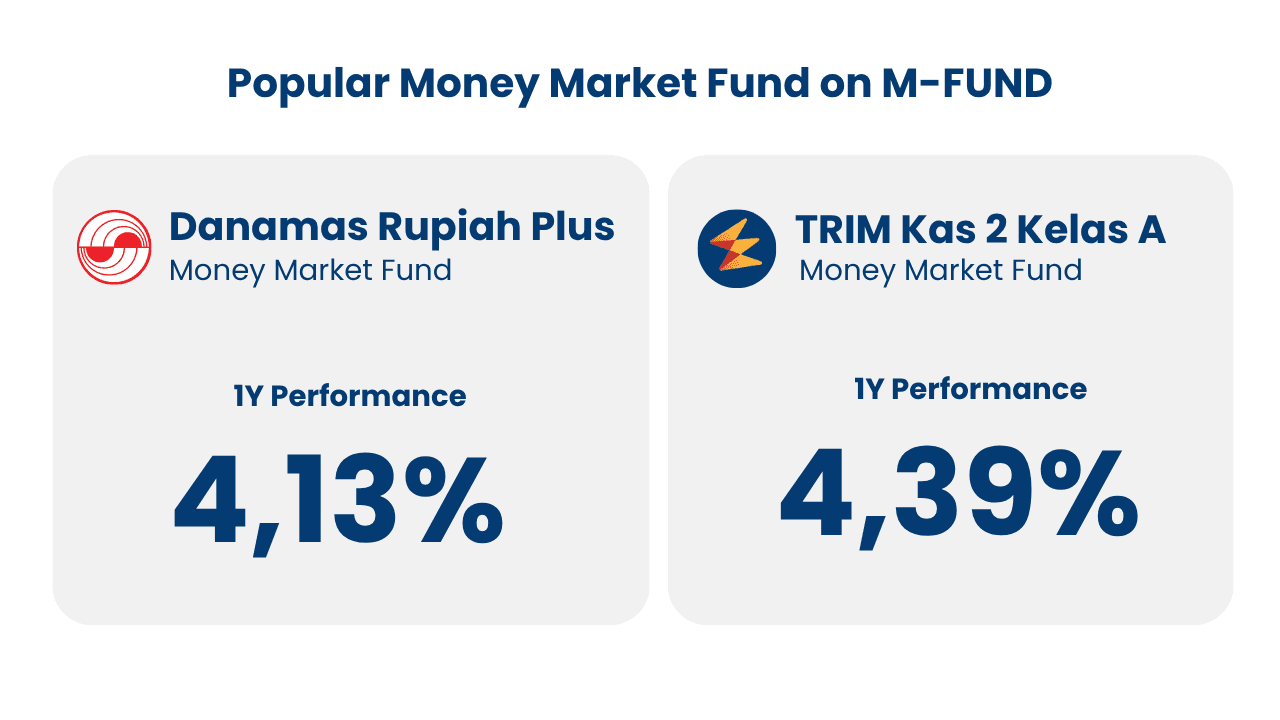
Data as of 7 September 2026
Conclusion
The Core & Satellite strategy helps investors separate the part of the portfolio designed for long-term objectives from the part used to capture specific market opportunities.
A well-structured investment portfolio is not necessarily the one with the most products or the highest returns. More importantly, it should be aligned with the investor’s goals, time horizon, and risk profile.
Core provides direction. Satellite captures opportunities.
Start Investing in Mutual Funds Based on Your Goals with M-FUND
Through M-FUND by Mirae Asset, investors can explore a range of mutual funds based on their investment needs and risk profile.
Before investing, review each product’s characteristics, risks, investment policy, Prospectus, and Fund Fact Sheet.
Disclaimer: This article is for educational and informational purposes only and does not constitute investment advice or a recommendation. Past performance does not guarantee future results. Investors are advised to review the Prospectus and Fund Fact Sheet before making an investment decision.
